
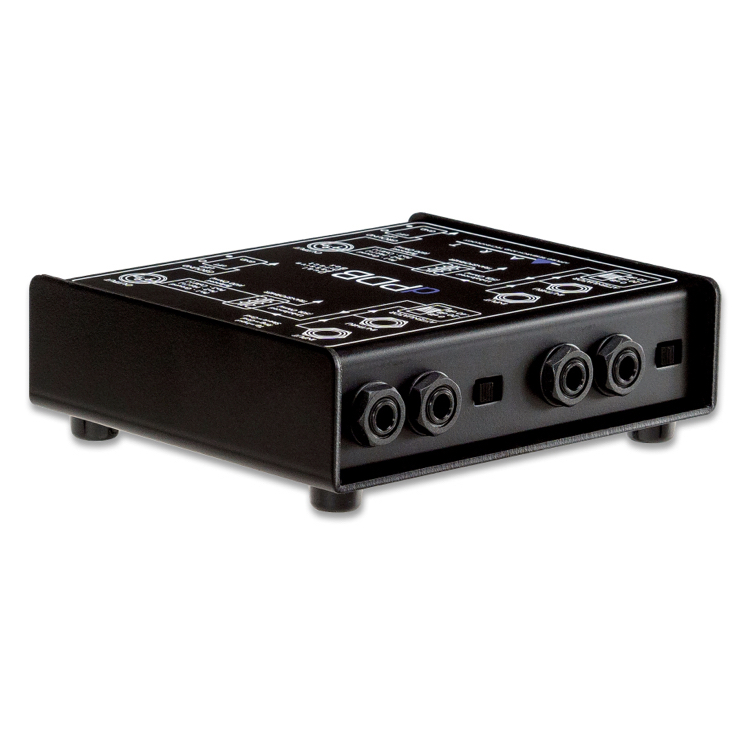


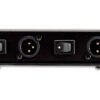
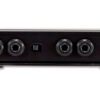
ART dPDB Dual Passive DI Box

In stock
- Two passive DI channels in one enclosure
- Ideal for stereo keyboards, DJ mixers and laptops
- Switchable 0, -20 and -40 dB pad on each channel
- Ground lift switch on each channel
- Parallel link jack per channel to feed an amp
- Rugged steel chassis, no power required
$119
In stock
The ART dPDB is a dual passive DI box that puts two direct boxes in one rugged steel enclosure, made for keyboard players, DJs, live sound engineers and home studios that need to send stereo or two separate unbalanced sources to balanced mixer inputs. Each channel converts a high-impedance instrument, line or speaker-level signal into a balanced XLR output, with no batteries or phantom power needed.
Why a dual DI?
Stereo sources, such as keyboards, synths, drum machines, laptops and DJ mixers, need two DI channels, one for left and one for right. Instead of two separate boxes, two batteries and two sets of cables to manage, the dPDB keeps both sides together in one box with matching settings. You can also use the channels independently, for example a bass on one side and an acoustic guitar on the other.
What each channel does
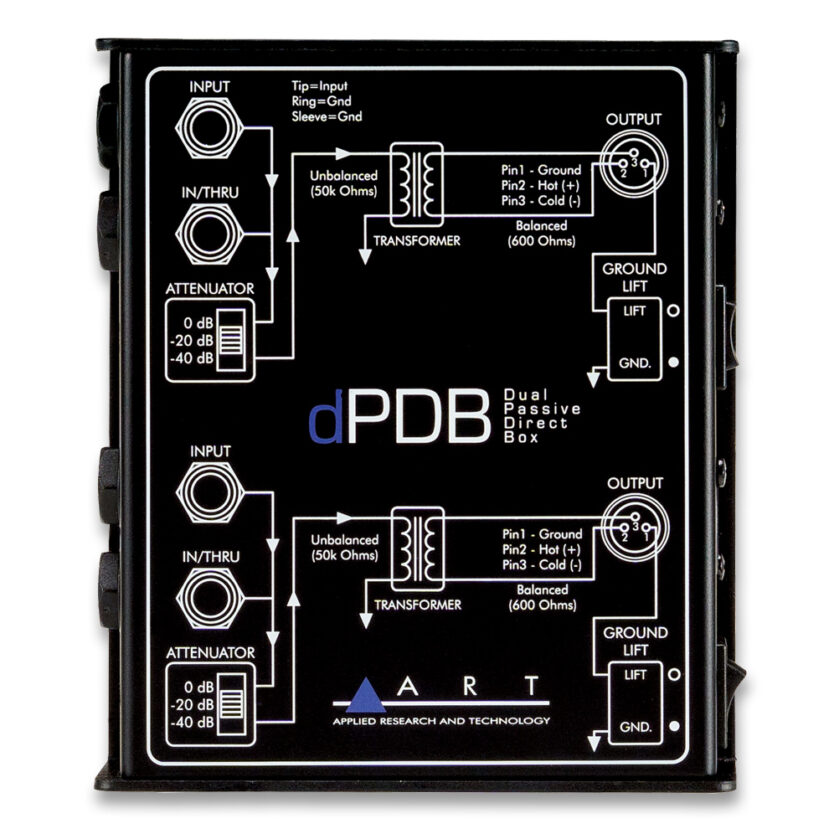
Each channel takes an unbalanced signal on a 1/4″ input and converts it into a balanced, low-impedance (600 Ω) signal on an XLR output. A balanced signal can run long distances to a stage box or mixer without picking up hum and interference, and it plugs straight into a mic input.
Because the dPDB is passive, it needs no power at all. There are no batteries to replace and no reliance on phantom power from the desk.
Pads for any source level
Each channel has a switchable 0, -20 or -40 dB input pad, so one box handles very different sources:
- 0 dB: lower-output instruments.
- -20 dB: keyboards, synths, laptops and other line-level gear.
- -40 dB: very hot signals, including the speaker output of an amplifier.
If the mixer channel clips with its gain turned all the way down, switch to the next pad.
Ground lift and link jacks
A ground lift switch on each channel breaks ground loops between your stage gear and the mixer, the most common cause of hum when you DI a keyboard or laptop. Leave it off unless you hear hum.
Each channel also has a parallel link jack. It passes your signal through unchanged, so you can feed an instrument amp or keyboard amp on stage while the XLR output goes to front of house.
Audio performance and build
ART specifies a frequency response of 10 Hz to 50 kHz (±0.5 dB at +4 dBu), beyond the audible range at both ends. The inputs and link jacks are 50 kΩ, and the outputs are 600 Ω. The rugged steel chassis measures 146 x 127 x 50 mm, a practical size for the stage floor or the top of a keyboard stand.
Who is the ART dPDB for?
- Keyboard and synth players sending stereo outputs to the PA.
- DJs connecting an unbalanced DJ mixer output to a venue’s balanced system.
- Laptop and backing-track users running playback to front of house.
- Venues, churches and rental kits that need durable, power-free DI boxes for the live sound inventory.
- Home studios connecting stereo line sources to the mic inputs of an audio interface.
Like most passive DIs, the dPDB has a 50 kΩ input. That’s ideal for keyboards, active basses and line-level gear, but lower than passive guitar pickups and piezos usually prefer, which can soften their top end. For a passive electric or acoustic guitar, an active DI is often the better match.
ART dPDB vs ART ZDirect
Both are passive DIs from ART with 50 kΩ inputs, 600 Ω outputs, 0/-20/-40 dB pads and ground lift. The dPDB gives you two channels in a steel box, which suits stereo sources. The ZDirect is a single channel in an aluminium box, and adds a switchable low-pass filter and phase invert. Choose the dPDB for stereo keyboards and DJ setups, and the ZDirect for a single instrument. See our full range of DI boxes to compare.
Key features
- Two passive DI channels in one box
- 1/4″ instrument input per channel, 50 kΩ
- Parallel link jack per channel
- Balanced XLR output per channel, 600 Ω
- Switchable 0, -20, -40 dB pad per channel
- Ground lift per channel
- 10 Hz to 50 kHz frequency response
- No power required
- Rugged steel chassis
Frequently asked questions
Can I use the ART dPDB for a stereo keyboard?
Yes. That’s one of its main jobs. Plug the left and right outputs into the two channels and send both XLR outputs to the mixer.
Does the ART dPDB need phantom power or batteries?
No. It’s fully passive and works without any power.
Can I DI a DJ mixer with it?
Yes. It converts the unbalanced DJ mixer output into two balanced XLR lines. Start with the -20 dB pad.
Can the two channels be used separately?
Yes. Each channel has its own input, link, output, pad and ground lift, so you can use it for two different instruments.
How do I stop hum when using a DI box?
Engage the ground lift switch on the affected channel. It breaks the ground loop between the stage equipment and the mixer.
| Weight | 1.1 kg |
|---|---|
| Dimensions | 15.8 × 13.7 × 5.4 cm |
| brands | Art Pro Audio |
Specifications
| Specification | Details |
|---|---|
| Type | Dual passive DI box |
| Channels | 2 |
| Inputs | 1/4″ instrument input per channel, 50 kΩ |
| Link | Parallel link jack per channel, 50 kΩ |
| Outputs | XLR balanced per channel, 600 Ω |
| Input pad | 0, -20, -40 dB (switchable, per channel) |
| Ground lift | Switchable, per channel |
| Frequency response | 10 Hz to 50 kHz (±0.5 dB at +4 dBu) |
| Power | None required (passive) |
| Chassis | Steel |
| Dimensions | 146 x 127 x 50 mm |
Related products
-
DI Boxes
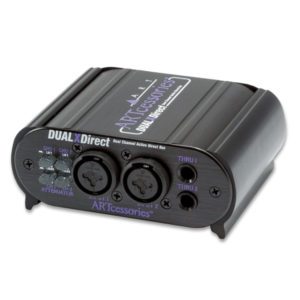
ART Dual XDirect Two-Channel Active DI Box
- Two independent active DI channels in one box
- 470 kΩ input impedance, ideal for passive pickups and piezos
- Runs on 18 to 48V phantom power or a 9V battery
- Switchable 0 or -30 dB pad and ground lift per channel
- Combo 1/4″ TRS/XLR inputs and 1/4″ thru jacks
- 10 Hz to 100 kHz frequency response
SKU: ARTP_DUALXDIRECT -
Patchbays & Routing
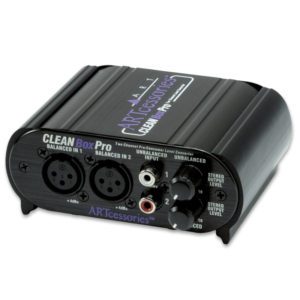
ART CleanBox Pro Dual-Channel Level Converter
- Converts -10 dBV consumer level to +4 dBu balanced pro level
- Also converts balanced +4 dBu back down to -10 dBV unbalanced
- 2 channels in each direction, usable at the same time
- RCA and 1/8″ jacks on the consumer side, XLR on the pro side
- Separate stereo level controls for each direction
- Rugged extruded aluminium case, power supply included
SKU: ARTP_CLEANBOXPROCE -
DI Boxes
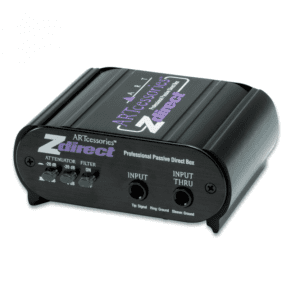
ART ZDirect Passive DI Box
- Fully passive: no batteries or phantom power needed
- Turns unbalanced 1/4″ signals into a balanced XLR output for long cable runs
- Switchable 0, -20 and -40 dB pad for instruments, line and speaker-level sources
- Ground lift, phase invert and a 30 kHz low-pass filter to fight hum and noise
- Thru jack to feed your amp at the same time
- Compact black anodised aluminium case
SKU: ARTP_ZDIRECT