ART LSwitch Latching Footswitch for Amps and Effects

In stock
- Latching footswitch for amp channels, reverb or effect bypass
- Normally closed contacts for gear that expects an NC switch
- Passive: switches with no power or batteries
- Status LED powered by the connected amp or effect
- Connects with a standard 1/4″ instrument cable
- Compact enclosure that saves pedalboard space
$99
In stock
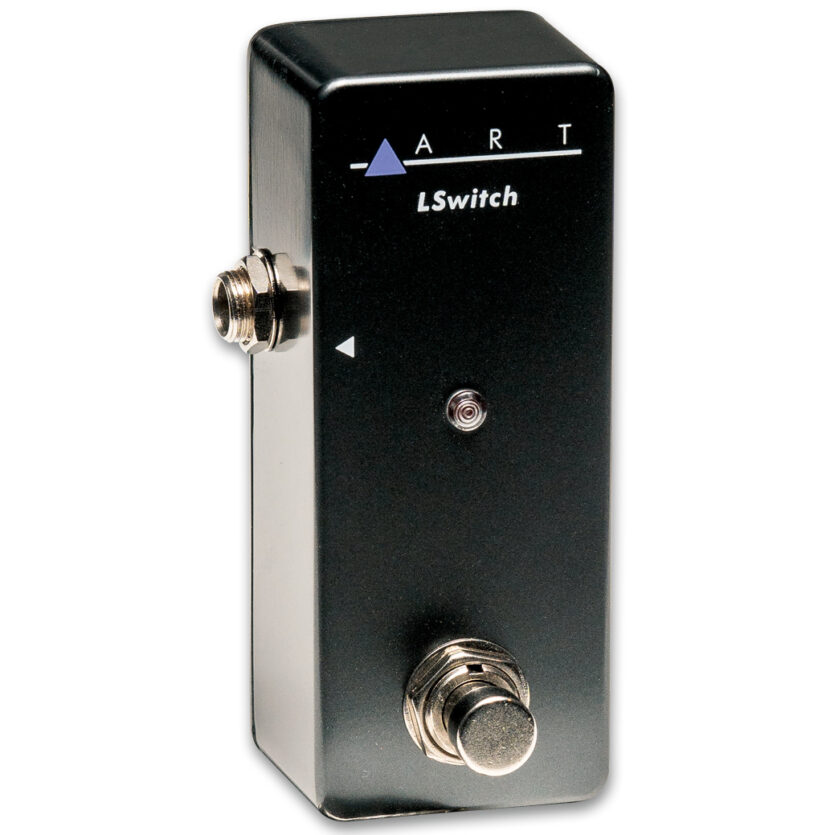
The ART LSwitch is a compact latching footswitch for guitarists and bassists who need to control an amp or effect that has an external footswitch jack. Use it to change amp channels, turn reverb on and off or engage an effect’s bypass, all from a pedal that takes up very little room on your board. ART also lists it as the L-Switch.
What the ART LSwitch does
Many amplifiers and rack or desktop effects have a footswitch jack on the back, but ship without a footswitch, or with a bulky one that does not fit on a pedalboard. The LSwitch plugs into that jack with an ordinary 1/4″ instrument cable and gives you a sturdy stomp switch that you can place anywhere on your board. Each press changes state and stays there until you press it again, which is what “latching” means.
Normally closed: check this before you buy
Footswitches are not all wired the same way, and this is the most important thing to know about the LSwitch. It is a latching switch with normally closed (NC) contacts.
- Latching vs momentary: a latching switch holds its position after you lift your foot. Functions such as tap tempo, looper control or some digital multi-effects inputs usually need a momentary switch instead, and a latching switch will not work properly with them.
- Normally closed vs normally open: an NC switch has its contacts closed in its resting state. If your amp or effect expects a normally open switch, the LSwitch can still toggle it, but the states may be reversed, for example the LED showing “on” when the effect is actually off.
Your amp or effect’s manual normally states what type of footswitch it needs. If it asks for a latching switch, or simply a switch that opens and closes a contact, the LSwitch is a good candidate.
Passive design with a status LED
The LSwitch needs no batteries and no power supply to switch. Its status LED takes a small amount of power from the switching circuit of the connected device, so you can see at a glance which state you are in. Not every amp or effect supplies enough current to light it. If yours does not, the LED stays dark but the switch itself still works normally.
Who is it for?
- Good fit: players who lost or never had the original footswitch for their amp, and anyone who wants amp channel switching on the same board as their pedals.
- Good fit: controlling a single function on an effect unit, such as bypass, from a pedalboard.
- Not the best fit: gear that needs a momentary switch, two-button footswitches for amps with separate channel and reverb controls on one stereo jack, or anything that needs MIDI control.
LSwitch vs a stock amp footswitch
Factory footswitches often come in large metal or plastic boxes with a long fixed cable, which makes them awkward to place on a pedalboard. The LSwitch is a single small enclosure that uses any standard instrument cable, so you can choose the cable length and route it neatly with the rest of your board. The trade-off is that it is one switch for one function; a stock dual footswitch may control two functions at once. If you are also adding effects, see our guitar effects pedals, and browse guitar amplification for amps and amp accessories.
Setup tips
- Use a mono (TS) 1/4″ instrument or patch cable between the LSwitch and the footswitch jack.
- Test it at low volume first and note which LED state matches which channel or effect state.
- If the states feel back-to-front, that is a sign your gear expects a normally open switch.
Key Features
- Latching footswitch
- Normally closed (NC) contacts
- Single 1/4″ jack, connects with a standard instrument cable
- Passive switching, no power required
- Status LED powered by the connected device
- Compact, pedalboard-friendly enclosure
Why buy from 10dB
Orders leave the 10dB warehouse the same day as your purchase and travel by Australia Post, usually arriving within 3–5 days. Explore more gear in our instruments section.
FAQ
Will the ART LSwitch work with my amp?
It works with amps and effects that have an external footswitch jack and accept a latching switch. Check your manual: if it calls for a momentary switch, the LSwitch is not the right choice.
Does the LSwitch need batteries or a power supply?
No. Switching is passive. The LED takes its power from the connected device.
Why doesn’t the LED light up?
Some amps and effects do not supply enough current through the footswitch jack to power the LED. The switch still works; only the indicator stays off.
What is the difference between normally closed and normally open?
It describes the state of the contacts at rest. The LSwitch is normally closed. With gear that expects normally open, it usually still switches but the on and off states can be reversed.
Can I use it for tap tempo?
Usually not. Tap tempo normally needs a momentary switch, and the LSwitch is latching.
What cable do I need?
A standard 1/4″ instrument cable from the LSwitch to the footswitch jack on your amp or effect.
| Weight | 0.226796185 kg |
|---|---|
| Dimensions | 27 × 15 × 8 cm |
| brands | Art Pro Audio |
Specifications
| Specification | Details |
|---|---|
| Type | Latching footswitch |
| Contacts | Normally closed (NC) |
| Connection | 1 x 1/4" jack, standard instrument cable |
| Power | None required for switching (passive) |
| Status LED | Powered by the connected device |
Related products
-
-
Guitar Effects & Pedals
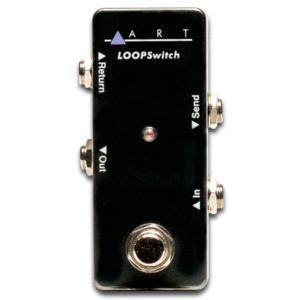
ART LoopSwitch True Bypass Loop Switcher
- Switch a whole chain of pedals on or off with one stomp
- True bypass keeps your dry signal clean when the loop is off
- Doubles as an A/B box for two amps or two rigs
- Passive switching: works with no power at all
- Optional status LED runs on any 5–18V pedal supply
- Adds true bypass to vintage pedals without modding them
SKU: ARTP_LOOPSWITCH -
Guitar Effects & Pedals, Weekly Deals
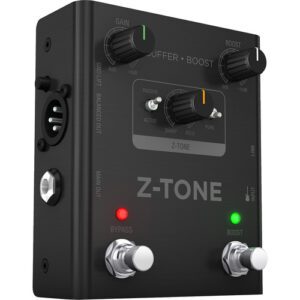
IK Z-TONE Buffer Boost – Preamp/DI Pedal w/Advanced Tone Shaping
 Guitar Effects & Pedals, Weekly Deals
IK Z-TONE Buffer Boost – Preamp/DI Pedal w/Advanced Tone Shaping
- Selectable Active/Passive Pickup Input
- Z-TONE Variable Impedance
- Switchable PURE/JFET Channel Tone
- Buffers Signal for Long Cable Runs
- Boost Circuit Adds Volume and Drive
- 1/4″ Thru and Main Outputs
- Balanced XLR Output
- Ground-Lift Switch Reduces Buzz and Hum
- 9V Battery, Power Supply, Phantom Power
- Tough, Road-Ready Metal Housing
SKU: IKMT_IP-ZTONE-BB -