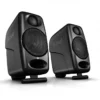
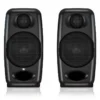
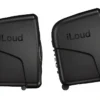
IK iLoud Micro Monitor Black – Ultra-compact Reference Studio Monitors (Pair)

In stock
- Bi-amped 2-way design: 3/4″ silk dome tweeter and 3″ composite woofer per speaker
- 50W RMS total with bass response down to 55 Hz (-3 dB)
- 56-bit DSP with Desktop, high and low shelf EQ switches for your placement
- RCA, 3.5mm and Bluetooth inputs for mixing and everyday listening
- Only 180 x 135 x 90 mm and 1.72 kg for the pair, ideal for travel
- Tilting isolation base and 3/8″ mic stand thread built in
$399 $599
In stock
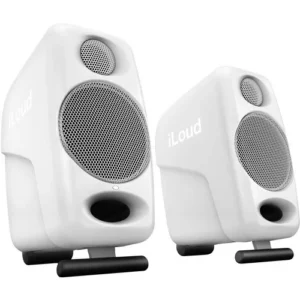
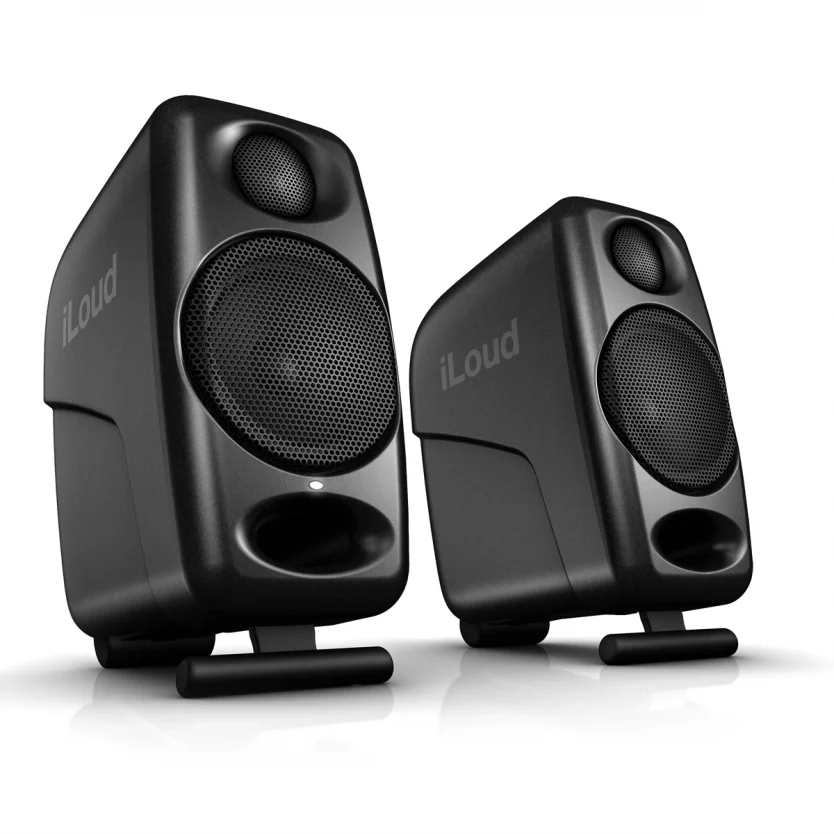
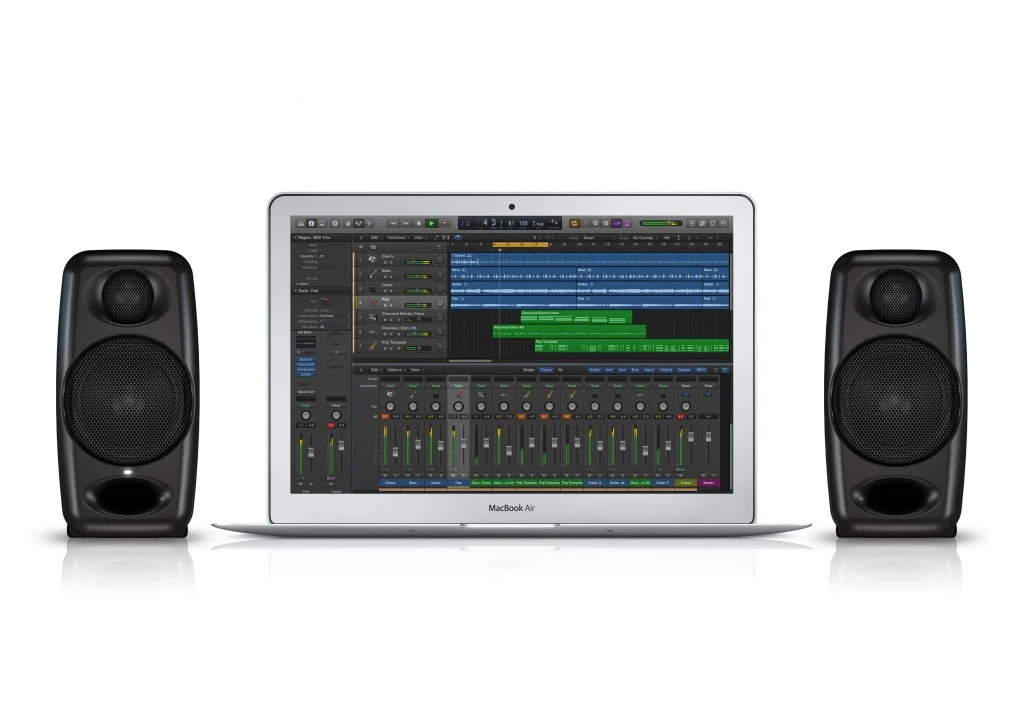
The iLoud Micro Monitor from IK Multimedia is a pair of ultra-compact, bi-amped reference monitors made for producers, songwriters, podcasters and video editors who work at a small desk, in a bedroom studio or on the road. Each speaker is only 180 x 135 x 90 mm, yet the pair delivers 50W RMS and bass that reaches down to 55 Hz, so you can make real mix decisions in spaces where full-size monitors simply do not fit.
Most home setups are a desk pushed against a wall, and that placement makes ordinary speakers sound boomy and vague. The iLoud Micro Monitor was designed for exactly that situation: small enough to sit close to your ears, with DSP that compensates for desk and wall placement instead of fighting it.
Bi-amped sound from a 3″ monitor
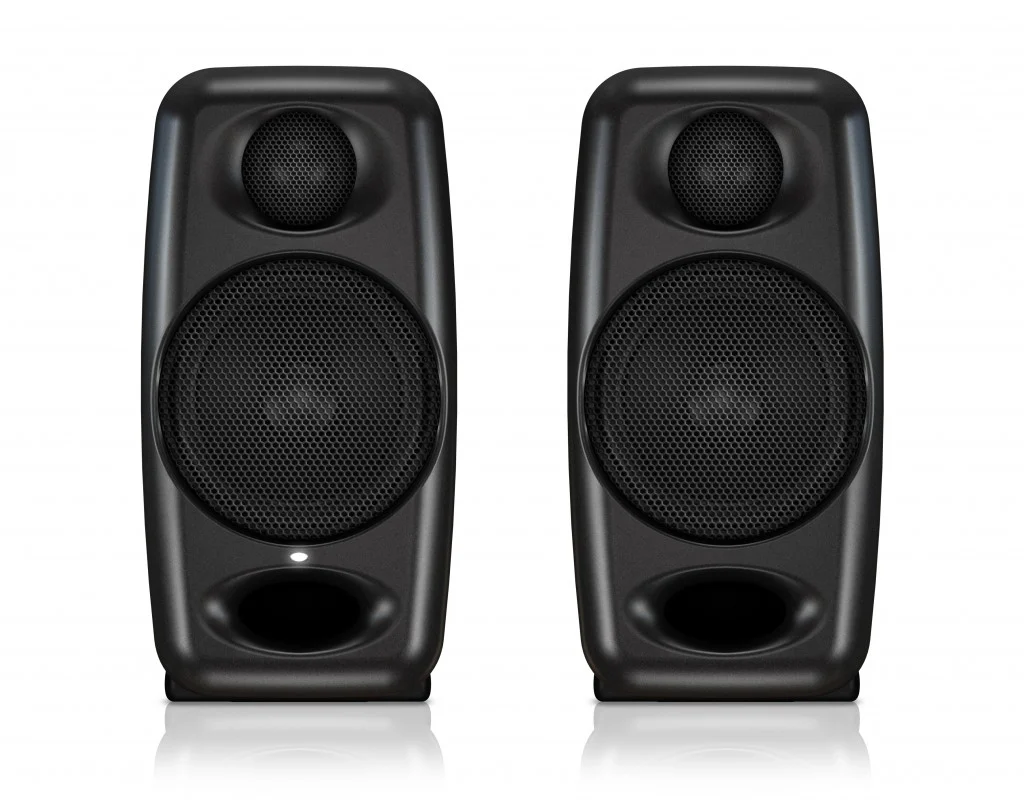
Each cabinet holds a 3/4″ silk dome tweeter with a neodymium magnet and a 3″ high-rigidity composite woofer, crossed over at 3 kHz and fed by its own Class D amplifiers. Four amplifiers in total give 18W RMS to each woofer and 7W RMS to each tweeter (70W peak for the system). A front-firing bass reflex port helps the low end, and the response measures 55 Hz to 20 kHz at -3 dB, extending to 45 Hz at -10 dB.
All of this is managed by a 56-bit DSP that handles the crossover, frequency and phase correction, and dynamic control. The result is a clean, detailed sound with tight bass that reviewers consistently describe as far bigger than the boxes suggest. Sound On Sound compared its low end with decent 5″ monitors at moderate levels, while noting it cannot match the deep, physical bass of larger speakers.
Placement EQ for real-world rooms
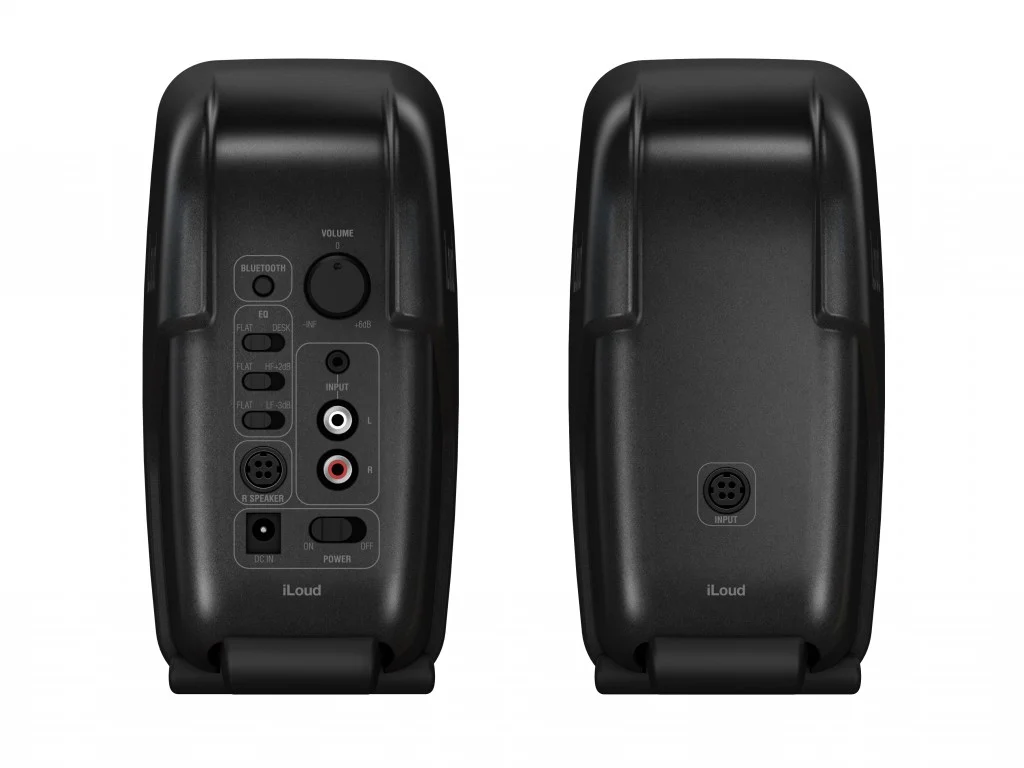
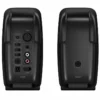
Three switches on the rear let you tune the pair to where it sits:
- Desktop: +3.5 dB between 1 kHz and 10 kHz and -1 dB below 400 Hz, to offset the bass build-up and lost detail you get on a desk.
- High shelf: 0 or -3 dB from 4 kHz up, to tame bright, reflective rooms.
- Low shelf: 0 or -3 dB from 250 Hz down, useful close to a wall or in a corner.
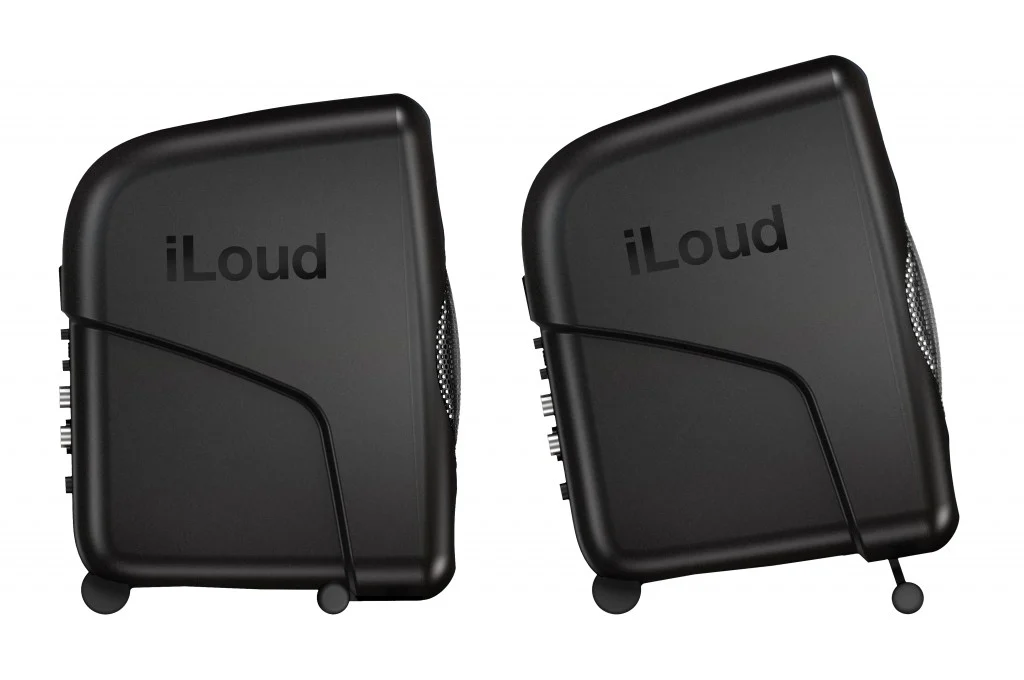
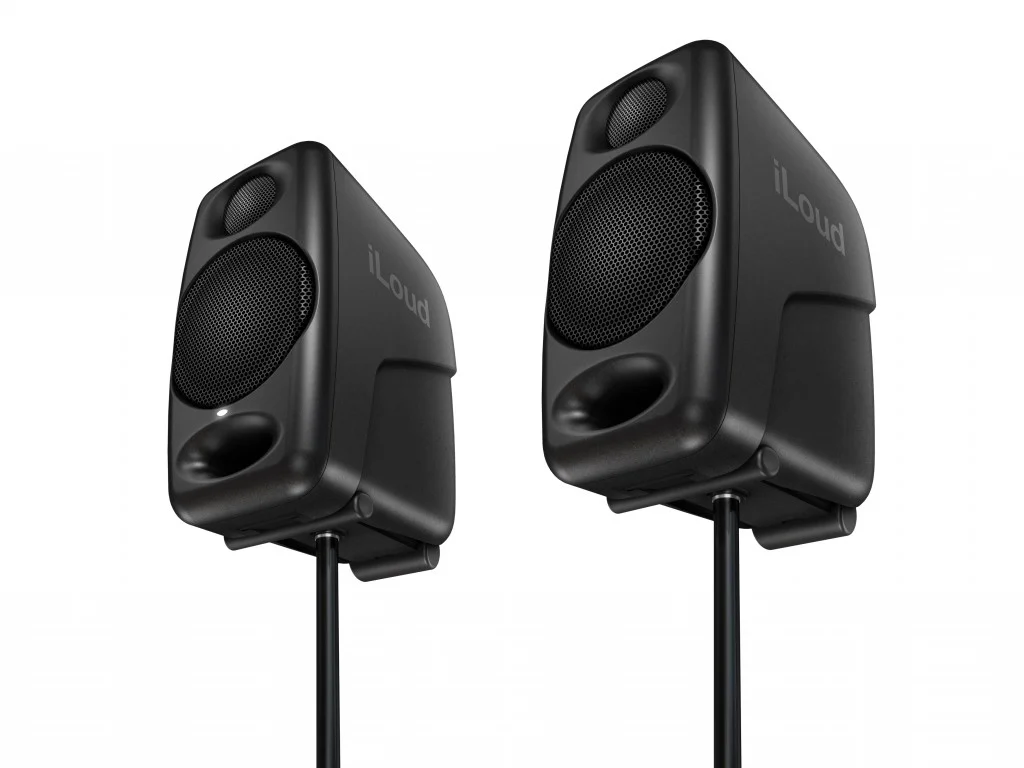
An integrated isolation base decouples each speaker from the desk and lets you tilt it up towards your ears. For free-field positioning, the base also has a UNC 3/8″-16 thread, so the monitors can go onto mic stands without extra brackets (stands with a 5/8″ thread need a small adapter).
Connections: from your interface to your phone
The left speaker houses the electronics and connects to the right speaker with the included 4-pin link cable. Inputs are a pair of RCA sockets and a 3.5mm stereo mini-jack, and the included 3.5mm-to-RCA cable gets you going with a laptop or phone straight away. Bluetooth (A2DP) is built in too, so the same pair works as everyday speakers for music and videos when you are not mixing. Power comes from an included external power supply.
Who is it for?
- Home and bedroom producers who have room for only small speakers but want an honest reference.
- Travelling musicians and engineers who need trustworthy monitoring in hotel rooms, on tour or at a client’s place.
- Mix engineers wanting a small second reference beside larger studio monitors.
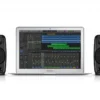
- Podcasters, video editors and content creators working at a laptop or compact desk.
Not the best fit if: you produce bass-heavy music and need to hear sub-bass below about 50 Hz without headphones or a subwoofer, you mix at high volume from several metres away, or you need balanced XLR or TRS inputs.
iLoud Micro Monitor vs other compact monitors
- iLoud Micro Monitor Pro: IK’s newer model adds built-in ARC room calibration with a measurement mic, X-MONITOR software control, a balanced XLR input and an internal power supply. It costs considerably more. The original iLoud Micro Monitor is the simpler, more affordable choice and keeps Bluetooth for casual listening.
- iLoud MTM: a larger single-cabinet design with two 3.5″ woofers, 100W of power, deeper bass and ARC calibration. Choose it if you have more desk space; choose the Micro Monitor when size and portability matter most.
Compare more options in our active studio monitors range, pair them with one of our audio interfaces, or add a studio subwoofer for more low end.
Setup tips
- Form an equilateral triangle: the two speakers and your head at roughly equal distances, with the tweeters pointing at your ears.
- Tilt the isolation base up on a desk so the tweeters aim at ear height rather than your chest.
- Start with every switch on Flat, then try Desktop if the sound is boomy on the desk, and the low shelf if the speakers sit close to a wall.
- Keep the monitors near the front edge of the desk, away from the wall, for cleaner bass.
- Use Bluetooth for listening, and a wired input when timing matters, such as recording or editing to picture.
Key Features
- Pair of ultra-compact 2-way active, bi-amped reference monitors
- 3/4″ silk dome tweeter and 3″ high-rigidity composite woofer per speaker
- Four Class D amplifiers: 50W RMS / 70W peak total
- Frequency response 55 Hz to 20 kHz (-3 dB), 45 Hz to 22 kHz (-10 dB)
- 56-bit DSP with digital crossover at 3 kHz
- Desktop, high shelf and low shelf placement EQ switches
- Front-firing bass reflex port
- Tilting isolation base with built-in 3/8″ mic stand thread
- RCA and 3.5mm stereo inputs plus Bluetooth (A2DP)
- 107 dB max SPL at 50 cm (both speakers playing)
- Just 1.72 kg for the pair
FAQ
Can I connect the iLoud Micro Monitor to my audio interface?
Yes. Use the RCA inputs or the 3.5mm stereo input. Most interfaces have balanced 1/4″ outputs, so you will need a 1/4″ TRS or TS to RCA cable, which is not included. There are no XLR or 1/4″ inputs on the speakers themselves.
Do I need a subwoofer?
For most mixing in a small room, no: the pair reaches 55 Hz at -3 dB and 45 Hz at -10 dB. If you work on electronic, hip hop or film music where sub-bass matters, add a subwoofer or check the low end on headphones.
Is Bluetooth good enough for mixing?
Bluetooth is great for listening to music and reference tracks, but it adds latency and is a compressed connection. For recording, mixing and editing to picture, use the wired RCA or 3.5mm input.
Can the iLoud Micro Monitor go on stands?
Yes. Each speaker has a built-in UNC 3/8″-16 thread for free-field positioning on mic stands. Stands with a 5/8″ thread need a 5/8″ to 3/8″ adapter.
Why does the left speaker weigh more than the right?
The left speaker contains the amplifiers, DSP and inputs, and drives the right speaker through the 4-pin link cable. That is why it weighs 920 g against 800 g for the right.
What is in the box?
Two speakers, an external power supply with power cable, the 4-pin speaker link cable and a 3.5mm stereo to 2 x RCA cable.
| Weight | 2.9 kg |
|---|---|
| Dimensions | 37 × 25 × 19 cm |
| brands | Ik Multimedia |
| color | Black, White |
Specifications
| Specification | Details |
|---|---|
| Type | 2-way active, bi-amped studio monitor (pair) |
| Tweeter | 3/4″ silk dome, neodymium magnet |
| Woofer | 3″ high-rigidity custom composite |
| Frequency response (-3 dB) | 55 Hz – 20 kHz |
| Frequency response (-10 dB) | 45 Hz – 22 kHz |
| Crossover frequency | 3 kHz |
| Amplifiers | 4 x Class D |
| Total output power | 50W RMS / 70W peak (both speakers) |
| Low frequency power | 18W RMS per speaker |
| High frequency power | 7W RMS per speaker |
| Max SPL | 107 dB at 50 cm (two speakers, averaged sine wave 100 Hz – 10 kHz) |
| DSP | 56-bit, full DSP control |
| Acoustic settings | Desktop (+3.5 dB 1–10 kHz, -1 dB below 400 Hz); high shelf 0/-3 dB from 4 kHz; low shelf 0/-3 dB from 250 Hz |
| Enclosure | Bass reflex, front-firing port |
| Analogue inputs | 2 x RCA, 1 x 3.5mm (1/8″) TRS stereo |
| Wireless | Bluetooth (A2DP) |
| Speaker link | 4-pin connector (cable included) |
| Latency (analogue input) | 1.02 ms |
| Mounting | Tilting isolation base, UNC 3/8″-16 mic stand thread |
| Power | External power supply (included) |
| Dimensions (each) | 180 x 135 x 90 mm |
| Weight | 920 g (left), 800 g (right), 1.72 kg (pair) |
| Colour | Black |
| In the box | 2 x speakers, power supply, power cable, 4-pin link cable, 3.5mm to 2 x RCA cable |
Related products
-
Active Studio Monitors, Sales, Weekly Deals
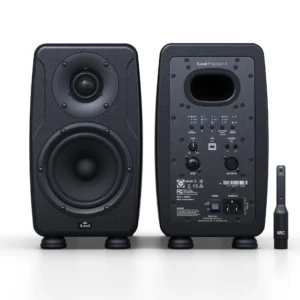
IK iLoud Precision 5 – Single Handcrafted 5″ Digitally Controlled Studio Monitor
 Active Studio Monitors, Sales, Weekly Deals
IK iLoud Precision 5 – Single Handcrafted 5″ Digitally Controlled Studio Monitor
- 5″ Ultralight Coated Paper Mid-Woofer
- 1.5″ Chambered Textile Dome Tweeter
- Class-D 135W RMS Amplifier
- DSP-Controlled Acoustic System (96 kHz)
- Frequency Response: 45 Hz to 30 kHz
- Linear Phase Response ±20° from 150 Hz Up
- Built-In ARC Calibration System with Mic
- X-MONITOR Control Software
- Combo XLR-1/4″ Input
- Includes 4 Isolation Pods
SKU: IKMT_MON-PRECISION-500-IN -
Active Studio Monitors
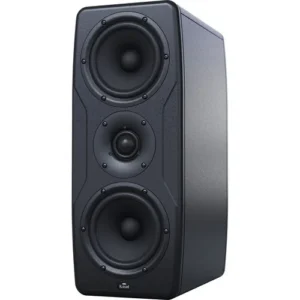
IK iLoud Precision MTM – Handcrafted 2 x 5″ Digitally Controlled Studio Monitor (Single Unit)
 Active Studio Monitors
IK iLoud Precision MTM – Handcrafted 2 x 5″ Digitally Controlled Studio Monitor (Single Unit)
- Two 5″ Ultralight Paper Mid-Woofers
- 1.5″ Chambered Textile Dome Tweeter
- Class-D 175W RMS Amplifier
- DSP-Controlled Acoustic System (96 kHz)
- Frequency Response: 45 Hz to 30 kHz
- Linear Phase Response ±20° from 150 Hz Up
- Built-In ARC Calibration System with Mic
- X-MONITOR Control Software
- Combo XLR-1/4″ Input
- Includes 4 Isolation Pods
SKU: IKMT_MON-PRECISION-MTM-IN -
Active Studio Monitors
ESI aktiv 05 2-way Powered Studio Monitor (Single)
- Brand new and high quality
- Made of supreme quality, durable EVA crush resistant, anti-shock material.
- Soft inner cloth lining, one mesh pocket inside.
- Compact and functional hard case keeps items safe and extremely portable.
- Force Touch trackpad (13-inch model)
SKU: ESIA_AKTIV05