IK ARC On-Ear D/A Converter & Headphone Amplifier with Headphone Correction

In stock
- Corrects the frequency response of more than 250 headphone models
- Physically modelled virtual studio monitors restore a natural stereo image
- ESS SABRE ES9290 DAC with 116 dB dynamic range
- 200 mW zero-impedance headphone amplifier drives demanding studio headphones
- USB-C and 3.5mm inputs, works standalone with no plug-ins or DAW
- Built-in battery for up to 4 hours, 5 presets, palm-sized aluminium body
$499 $549
In stock
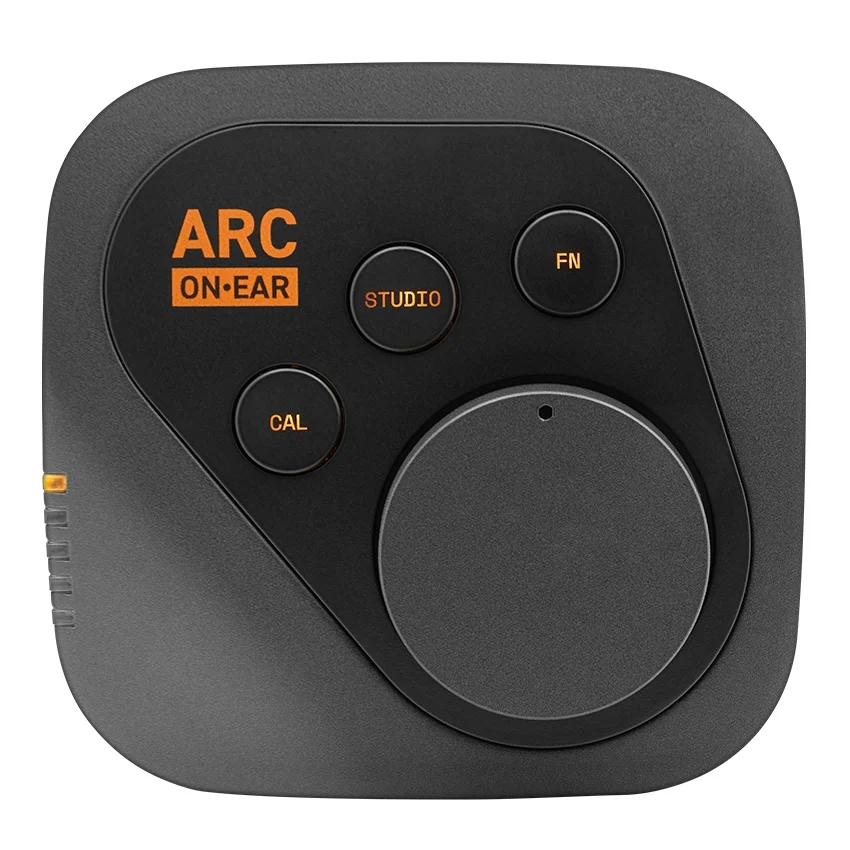
The IK ARC On-Ear is a standalone DAC and headphone amplifier with built-in headphone correction and studio monitor simulation, made for producers, mix engineers, musicians and content creators who mix on headphones at home, at night or on the road. Plug your headphones in, choose your model, and hear a flatter, more trustworthy response with the depth and stereo image of real monitors in a well-treated room.
Even “reference” headphones have their own tonal fingerprint, and all headphones place sound inside your head instead of in front of you, which makes stereo width, panning and reverb hard to judge. ARC On-Ear tackles both problems in one small box, and because the processing runs in the hardware, it works with any source rather than only inside a DAW.
Headphone correction for more than 250 models
ARC On-Ear uses IK’s calibration profiles, measured on reference rigs, to correct the response of more than 250 popular headphone models towards a neutral target. The list started at over 200 profiles from more than 60 manufacturers and keeps growing through free updates; version 1.5 added support for in-ear monitors. In the companion software you can also fine-tune tonal balance to taste, and a dedicated button bypasses the calibration so you can compare instantly.
Virtual studio monitors in your headphones
The second stage is studio simulation. Rather than adding artificial reverb, ARC On-Ear uses physical modelling to recreate how studio monitors behave in an ideal acoustic space, putting the sound back in front of you with natural depth and width. You can choose from a range of virtual studio monitors and consumer playback systems, adjust the listening environment, and switch the simulation off with its own bypass button. That means you can check how a mix might translate to different speakers without leaving your chair.
A proper DAC and amplifier, not just a processor
Inside is an ESS SABRE ES9290 DAC with 116 dB dynamic range and support for sample rates up to 192 kHz, feeding a 200 mW (100 mW per channel) zero-impedance headphone amplifier with a maximum output of 19 dBu. Output impedance matters: many audio interfaces and laptop headphone outputs change a headphone’s frequency response depending on its impedance, which would undo a careful correction curve. A digitally controlled analogue volume stage keeps full resolution even at low listening levels.
Connections, controls and portability
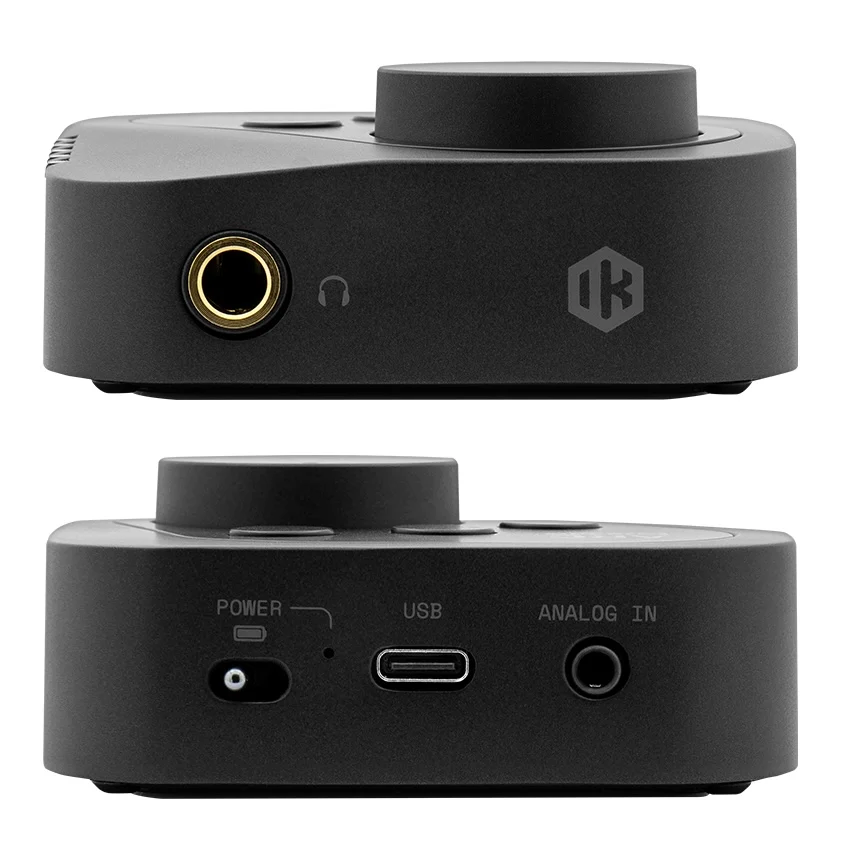
- USB-C: digital audio input from a Mac, PC or compatible tablet or phone, plus charging. It works without drivers on Mac and PC, and a Windows ASIO driver is available.
- 3.5mm analogue input: connect any line or headphone-level source, so ARC On-Ear can run fully standalone.
- 6.3mm (1/4″) headphone output on the front.
- Controls: volume, separate bypass buttons for calibration and studio simulation, and a user-assignable FN button for mute, dim or A/B switching.
- 5 presets store your headphone model, calibration and simulation settings.
- Battery: built-in rechargeable lithium battery for up to 4 hours, or run it from USB power.
The aluminium body measures about 79 x 77 x 35 mm and weighs around 170 g, small enough for a laptop bag, and it comes with a carrying case.
Who is it for?
- Home producers who mix mostly on headphones because of noise, neighbours, a sleeping family or an untreated room.
- Travelling musicians and engineers who need consistent monitoring in hotels, on tour or at a client’s studio.
- Mix engineers who want a dependable second reference beside their speakers.
- Podcasters, video editors and content creators who need accurate dialogue and music balance on headphones.
Not the best fit if: your headphones are not on the supported list yet (check before buying), you only want a basic headphone amp without correction, or you need multiple inputs and microphone preamps, which call for an audio interface.
ARC On-Ear vs other monitoring options
- Software headphone correction plug-ins: work only on audio playing through the computer that runs them. ARC On-Ear does the correction in hardware, so it also works with phones, tablets, mixers, keyboards and other analogue sources, with no plug-in to load or forget.
- Studio monitors with room correction: nothing fully replaces good speakers in a treated room, and reviewers note a virtual room remains a model. ARC On-Ear is the practical choice when speakers are not possible, or as a portable reference that sounds the same everywhere.
Pair it with headphones from our headphones range, compare other headphone amplifiers and DACs, or browse our studio monitors for a speaker-based setup.
Key Features
- Standalone headphone correction and virtual studio monitoring in hardware
- Calibration profiles for more than 250 headphone models, with free updates
- Physically modelled studio monitors and playback systems
- ESS SABRE ES9290 DAC, 116 dB dynamic range, up to 192 kHz
- 200 mW zero-impedance headphone amplifier, 19 dBu maximum output
- Digitally controlled analogue volume
- USB-C digital input and 3.5mm analogue input
- 6.3mm headphone output
- Bypass buttons for calibration and simulation, plus assignable FN button
- 5 storable presets via the ARC On-Ear control software
- Rechargeable battery, up to 4 hours
- Compact aluminium chassis with carrying case
FAQ
Do I need a computer or plug-in to use the ARC On-Ear?
Only for the first setup. You use the ARC On-Ear software to choose your headphone model and save presets. After that it runs standalone from its USB-C or 3.5mm input, with no plug-ins, DAW or drivers required.
Are my headphones supported?
More than 250 models are profiled, from most major studio and consumer brands, and IK keeps adding more, including in-ear monitors since version 1.5. Check IK’s supported headphone list for your exact model before you buy.
Can I use ARC On-Ear with my phone or iPad?
Yes. Use the 3.5mm analogue input with any device, or the USB-C digital input with compatible devices. The correction and simulation work on whatever you play.
How long does the battery last?
Up to 4 hours. For longer sessions, keep it connected to USB power, which also charges it.
Will it drive high-impedance studio headphones?
The amplifier delivers 200 mW (100 mW per channel) with up to 19 dBu output, and reviewers found it plenty loud with every headphone they tried, including demanding studio models.
Does it replace my audio interface?
No. It is a playback device with no microphone or instrument inputs. Many users keep their interface for recording and use ARC On-Ear as the headphone output for mixing.
| Weight | 170 kg |
|---|---|
| Dimensions | 7.9 × 7.7 × 3.5 cm |
| brands | Esi Audiotechnik |
Specifications
| Specification | Details |
|---|---|
| Type | Standalone headphone DAC and amplifier with correction and studio simulation |
| DAC | ESS SABRE ES9290 |
| Dynamic range | 116 dB |
| Sample rates | 44.1, 48, 88.2, 96, 176.4, 192 kHz |
| Headphone amplifier | 200 mW (100 mW per channel), zero-impedance output |
| Maximum output level | 19 dBu |
| Volume control | Digitally controlled analogue |
| Headphone profiles | 250+ models (expanding via updates) |
| Inputs | USB-C (digital audio and charging), 3.5mm stereo analogue |
| Output | 6.3mm (1/4″) TRS headphone |
| Controls | Volume, calibration bypass, simulation bypass, assignable FN button (mute, dim, A/B) |
| Presets | 5 |
| Power | Built-in rechargeable lithium battery (up to 4 hours) or USB-C |
| Software | ARC On-Ear control software (macOS, Windows); Windows ASIO driver available |
| Chassis | Aluminium |
| Dimensions | 79 x 77 x 35 mm |
| Weight | 170 g |
| In the box | ARC On-Ear, USB-C cable, 3.5mm stereo cable, carrying case |
Related products
-
Headphone Amplifiers, Headphones
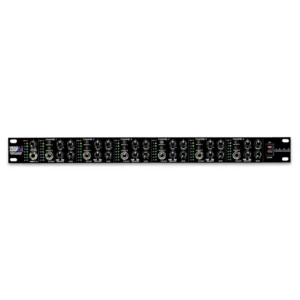
ART HeadAmp6 Pro Professional Six Channel Headphone Amplifier
- Six stereo channels, up to 12 pairs of headphones
- Aux input on every channel for personal “More Me” mixes
- Bass and treble EQ plus mono switching per channel
- 500 mW per channel into 32 Ω headphones
- Balanced XLR/TRS inputs with Thru for chaining units
- Compact 1U rackmount chassis
SKU: ARTP_HEADAMP6PROCE -
Headphone Amplifiers, Weekly Deals
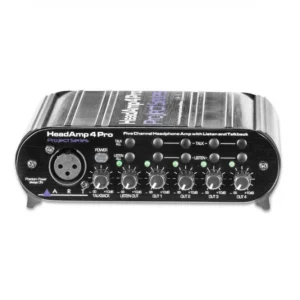
ART HeadAMP 4 Pro Headphone Amplifier with Talkback
- Multi-channel stereo headphone amplifier, independent volume per output
- Up to 150 mW per channel for loud, clean cue mixes
- Built-in talkback: XLR mic input with phantom power, footswitchable
- Talk to one performer or all of them
- Separate aux inputs for personal “more me” mixes
- Balanced main inputs, wide 10 Hz to 40 kHz response
SKU: ARTP_HEADAMP4PROCE -